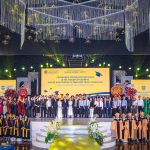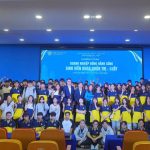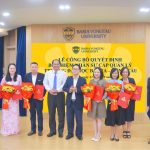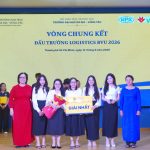

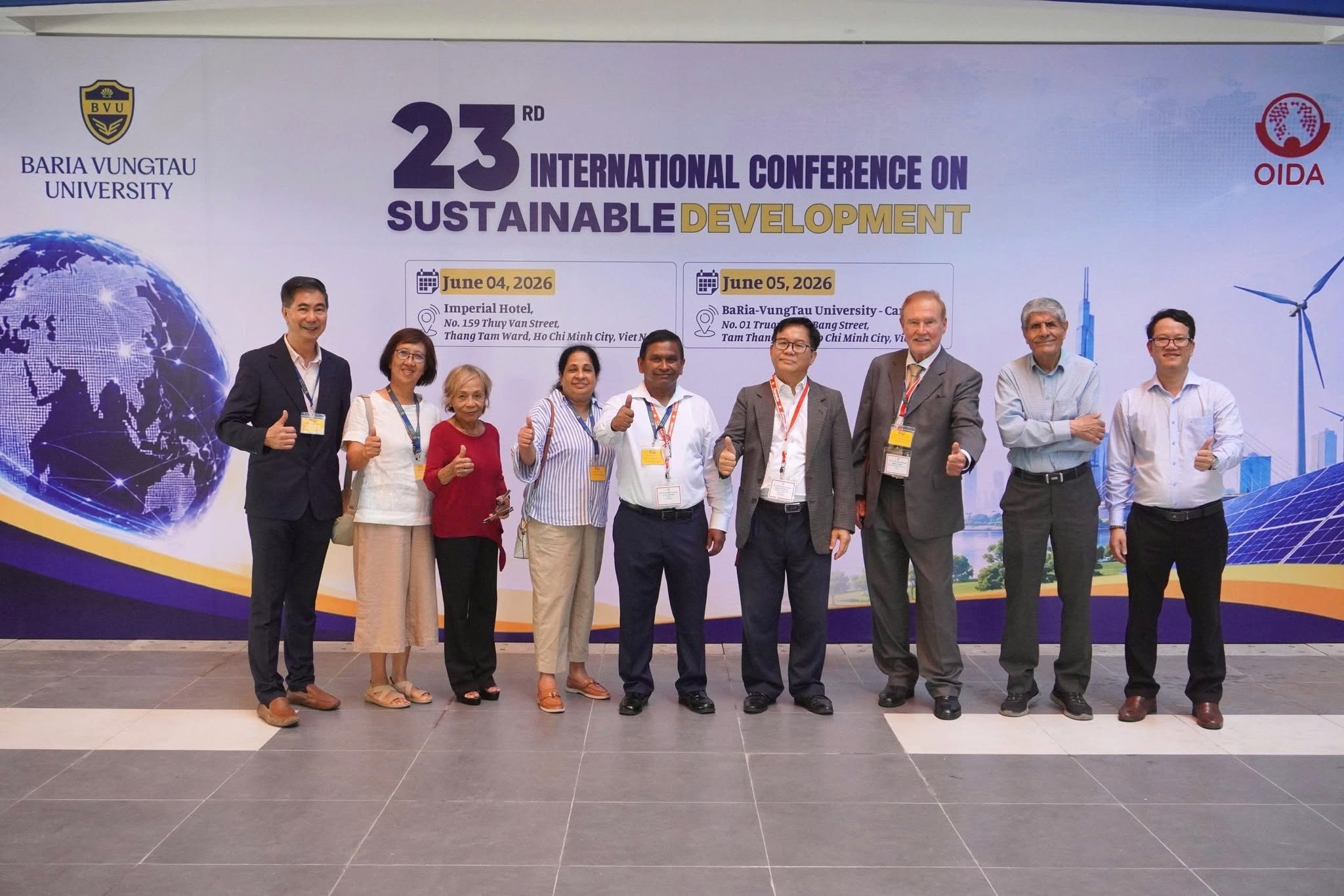
On 5 June 2026, the 23rd International Conference on Sustainable Development (ICSD 2026) officially concluded after two days of intensive, productive, and highly successful academic engagement. While the first day at the Imperial Hotel provided a formal opening focused on strategic and macro-level perspectives, the second day at Ba Ria–Vung Tau University (BVU) delivered a true “academic feast” through a Special Session featuring distinguished international speakers and a highly practical Research Methodology Workshop.
Reflecting on the Achievements of Day One
Before moving into the specialised sessions of the second day, participants reflected on the remarkable achievements of the opening day (4 June 2026).
Co-chaired by leading scholars including Professor Dr Henri Pallard (Canada), Dr Robert Taylor (USA), Assoc. Prof. Dr Nguyen Ba Hoang (President of BVU), and Dr Neville Hewage (Canada), the opening session successfully presented five strategic themes encompassing 20 specialised research papers across the fields of: Environment and Natural Resources, Development, Economics, Governance, Information and Communication
The Organising Committee reaffirmed that research papers successfully presented at the conference and demonstrating significant impact and practical applicability will be considered for publication in the OIDA International Journal of Sustainable Development, a prestigious journal indexed in internationally recognised scientific databases including SCOPUS and DOAJ. This serves as a strong motivation for researchers from Vietnam and around the world to pursue impactful and sustainable research.
Green Technology and Artificial Intelligence (AI)
On the morning of 5 June 2026, the Special Session featured an outstanding panel of international experts:
🔹 Dr Robert Taylor (Montclair State University, USA)
🔹 Dr Sushant Kumar Singh (Founding Director, CAIES Foundation, India)
🔹 Dr Emily Tan (Former Professor, Kwantlen Polytechnic University, Canada)
🔹 Dr Steven Cheah (Former Professor of Economics, Kwantlen Polytechnic University, Canada)
🔹 Dr Neville Hewage (Ontario International Development Agency – OIDA, Canada)
Participants had the opportunity to engage with two timely and highly relevant presentations addressing climate and sustainability challenges in Vietnam.
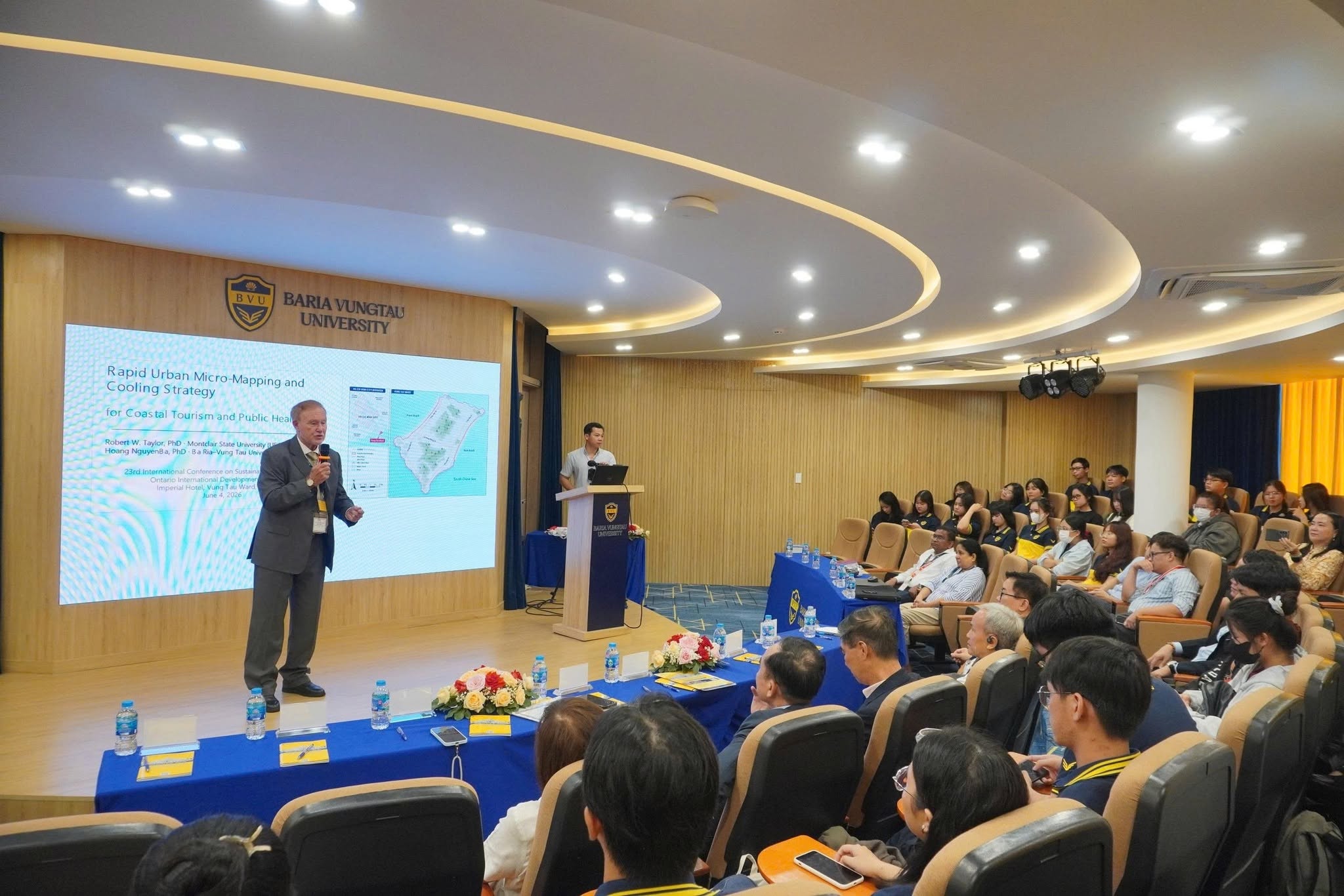
1. Cooling Strategies for Vung Tau’s Coastal Tourism City
In the presentation entitled “Rapid Urban Microclimate Heat Mapping and Cooling Strategies for Coastal Tourism and Community Health: An Urban Planning Case Study,” authors Robert Taylor and Nguyen Ba Hoang provided valuable insights into heat stress challenges in central Vung Tau, a coastal tourism city with a population of approximately 460,000.
The study demonstrated that rapid thermal microclimate mapping can serve as an effective decision-support tool, enabling local authorities to integrate urban vegetation planning, stormwater management, and sustainable tourism development strategies. This scalable and cost-effective model offers a practical solution for medium-sized tropical cities seeking climate adaptation measures under resource constraints.
2. Applying AI to Address Flooding Challenges in the Mekong Delta
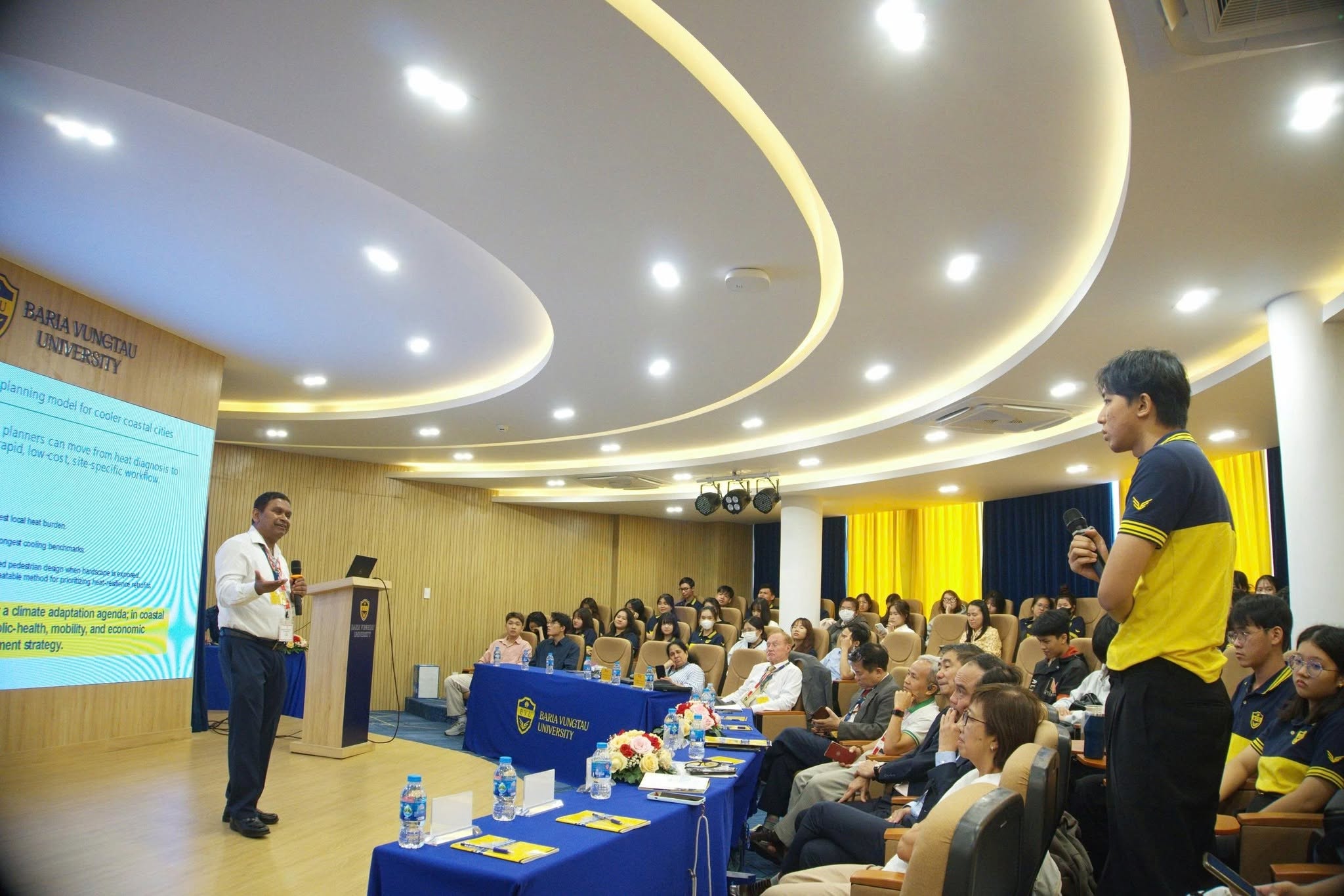
Continuing the technology-focused discussion, Dr Robert Taylor and Dr Sushant Singh presented “Artificial Intelligence in Solving Sustainable Development Challenges: A Practitioner’s Framework.”
Building upon Deloitte Insights’ 2026 report highlighting capability gaps in AI adoption for sustainable development, the presenters introduced a practical workshop model based on a real-world case study in the Mekong Delta.
The research integrated open-source geospatial tools (QGIS and Google Earth Engine) with satellite datasets (Sentinel-2, SRTM, and CHIRPS), applying machine-learning techniques such as Random Forest and Support Vector Machines (SVM) to predict flood risks at the local level.
Most notably, the framework utilised Large Language Models (LLMs) to automatically transform spatial analysis outputs into policy recommendations and ready-to-use environmental compliance reports. In this context, AI was presented not as an abstract concept, but as a powerful tool that enhances frontline capacity in addressing climate change challenges.
Sharing International Research Methodology Standards
The second half of the morning programme was dedicated to the Research Methodology Workshop, an intensive and practice-oriented training session designed to equip lecturers, postgraduate students, and researchers with essential tools for conducting rigorous scientific research.
Guided by internationally experienced professors, participants explored the entire research cycle through several key components:
Research Foundations and Design
From identifying research gaps and refining research questions to selecting appropriate research designs, including case studies, cross-sectional studies, and longitudinal studies.
Integrating Qualitative and Quantitative Methods
Participants developed skills in conducting interviews, focus groups, thematic analysis and coding frameworks, while also strengthening their competencies in survey design, sampling techniques, reliability testing, and statistical analysis using professional software such as NVivo, SPSS, R, and Excel.
Research Ethics and Governance
The workshop highlighted critical international standards related to confidentiality, informed consent, and institutional ethics review procedures—essential requirements in OIDA-supported international research projects.
The workshop’s comprehensive content and expert facilitation significantly enhanced participants’ analytical capabilities, methodological rigour, and commitment to data integrity. These competencies are fundamental for ensuring research outcomes meet the stringent auditing, funding, and legal standards required in professional research careers.
Concluding a Highly Successful Conference
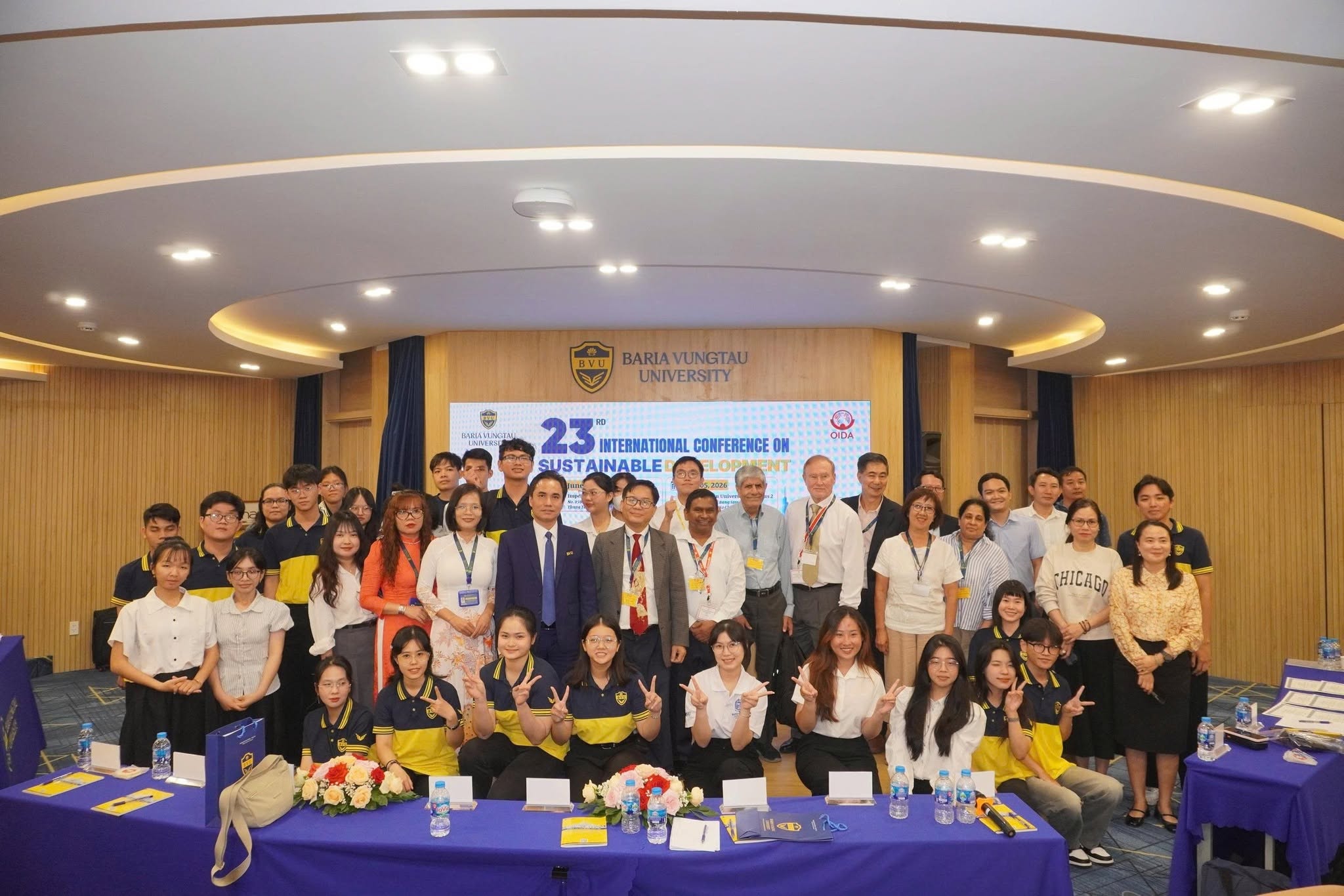
The conference concluded in an atmosphere of enthusiasm and international collegiality as BVU lecturers, researchers, and students actively engaged with global experts through insightful discussions and meaningful exchanges. Their professionalism and hospitality left a lasting impression on the international delegates.
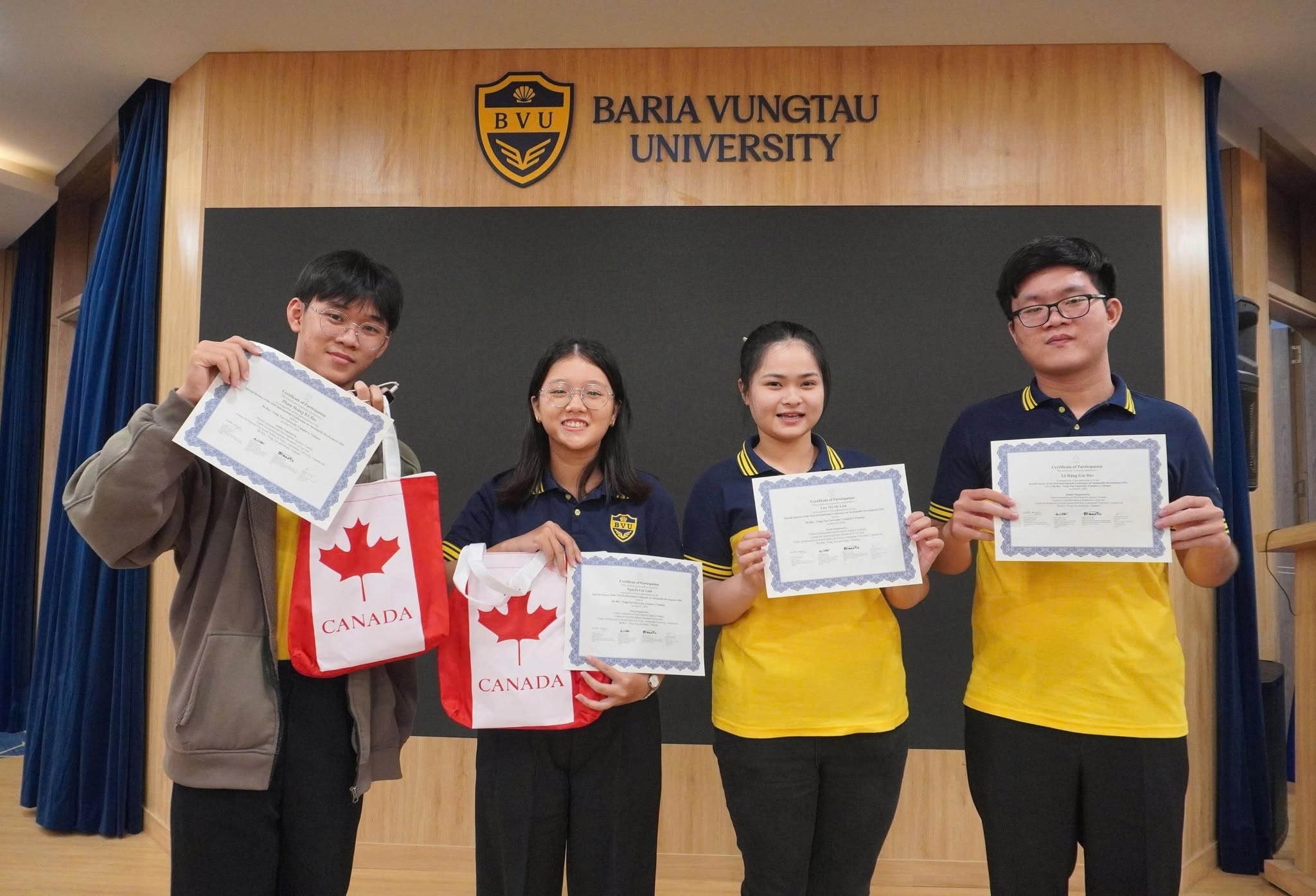
In his closing remarks, Assoc. Prof. Dr Nguyen Ba Hoang, President of BVU, expressed his pride and appreciation:
“Throughout this conference, we have witnessed rich academic exchanges, innovative ideas, and inspiring discussions. During the first day at the Imperial Hotel, participants presented 18 high-quality research papers addressing emerging challenges and practical solutions related to sustainable development. These studies reflect the diversity of issues facing society today while highlighting the crucial role of research and innovation in building a more sustainable future.
Today, at Ba Ria–Vung Tau University, we had the privilege of learning from distinguished professors and experts from the United States, India, Canada, and many other countries. Their insightful presentations broadened our perspectives on global trends, technological advancement, environmental sustainability, economic resilience, and international cooperation.
We firmly believe that these valuable exchanges will inspire new research directions and foster future collaborative initiatives among researchers, academics, and students participating in this conference.”
Reinforcing BVU’s International Academic Reputation
ICSD 2026 concluded not only with impressive statistics and high-quality research presentations, but more importantly with the establishment of a strong global network of scholars and researchers.
As the Host Country Partner, Ba Ria–Vung Tau University demonstrated its capability to organise international academic events at the highest standards while reaffirming its growing reputation within the global higher education community.
The success of ICSD 2026 once again confirms BVU’s position as a trusted destination for international scientific conferences and a university committed to “creating innovative ideas for a better world.”
Congratulations on the successful completion of ICSD 2026, and we look forward to welcoming scholars and researchers to future academic events hosted by BVU.