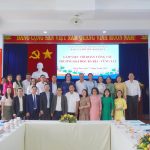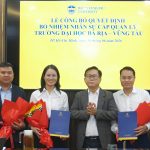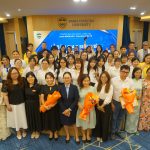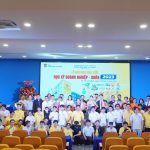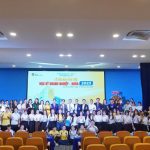

On the morning of September 12, 2026, at the Campus 3 Auditorium of Ba Ria – Vung Tau University (BVU), the four best teams competed in the Grand Finals of the “BVU Logistics Arena 2026.” The two competition rounds not only identified the champion team, but also highlighted a generation of students learning to turn knowledge into solutions, critical inquiry into professional competence, and real-world challenges into the drive to build green, efficient, and responsible logistics.
The “BVU Logistics Arena 2026” was designed around the core principle of integrating academic rigor with hands-on practice. While Round 1 (Warm-up) evaluated foundational knowledge and quick-response capabilities under time pressure, Round 2 (Project Defense) placed students in a more demanding setting: explaining, arguing, persuading, and defending the feasibility of their solutions before an expert panel.
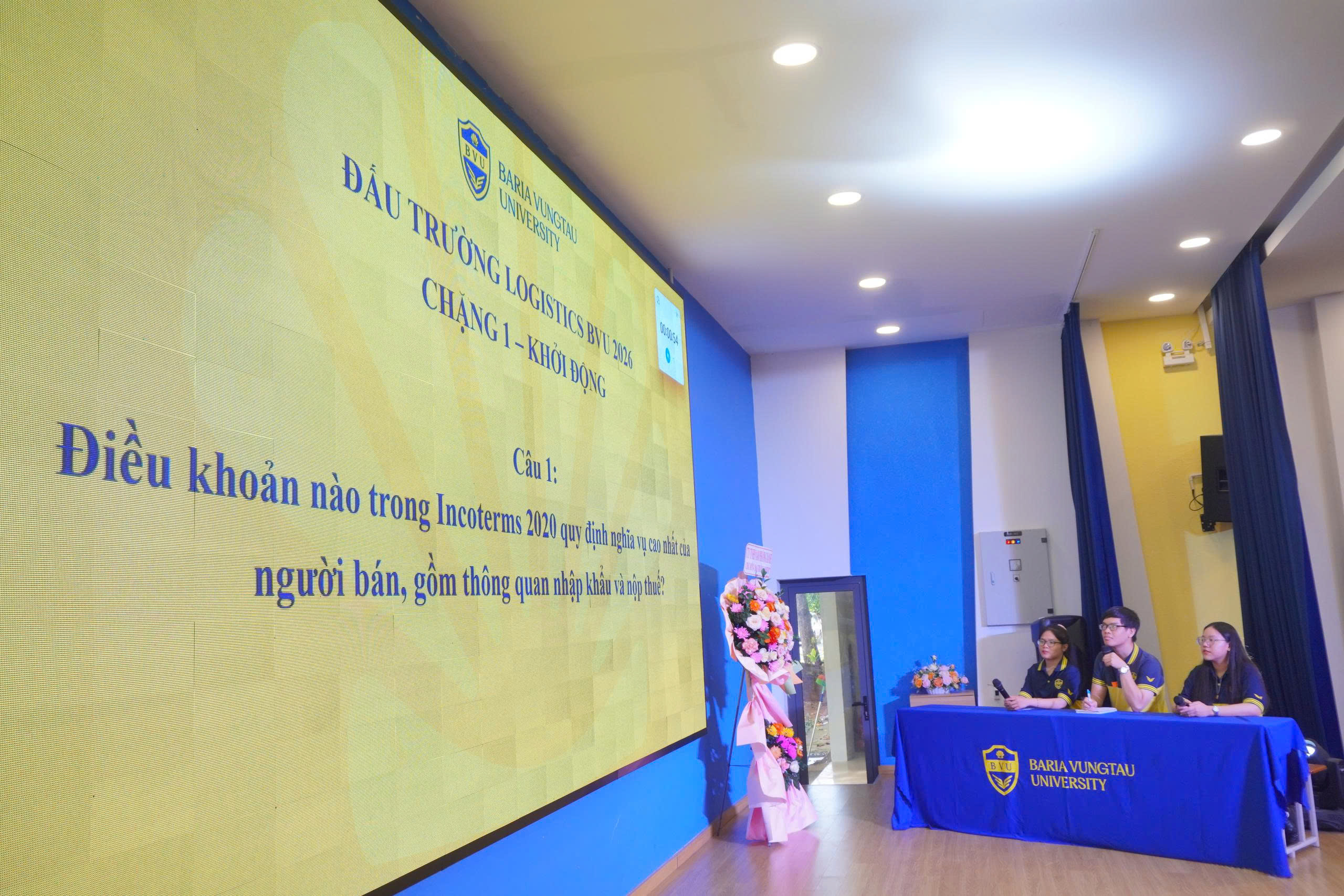
According to the finals’ format, in Round 1, each team had 60 seconds to answer 10 questions in the field of Logistics and Maritime Economics; each correct answer earned 10 points, and this segment accounted for 30% of the overall score. Round 2 contributed 70% of the total score, in which teams pitched their projects within a maximum of 15 minutes and defended their ideas during a direct Q&A session with the judges. This scoring distribution demonstrated that the competition’s focus was not merely on knowing facts, but on the ability to execute and defend an idea using data, logic, and a practical industry perspective.
This very structure defined the character of the arena: foundational knowledge served as the starting point, but systems thinking, teamwork, presentation skills, critical debate, and problem-solving abilities ultimately determined the quality of performance. These are also the essential competencies logistics graduates must carry into the workforce, where operational decisions are constantly weighed against cost, lead times, technology, environmental impact, and community value.
Pre-Competition Momentum and a Supportive Ecosystem
Immediately following the opening musical performance “Thịnh vượng Việt Nam sáng ngời” (Radiant, Prosperous Vietnam), the atmosphere across the auditorium quickly shifted to one of intense focus. Having outperformed 15 rival teams through the preliminary and semifinal rounds, the four most resilient teams gathered for the decisive contest. Ahead of them lay not only the championship title, but also the opportunity to represent BVU at the nationwide “Vietnam Young Logistics Talents 2026” competition.
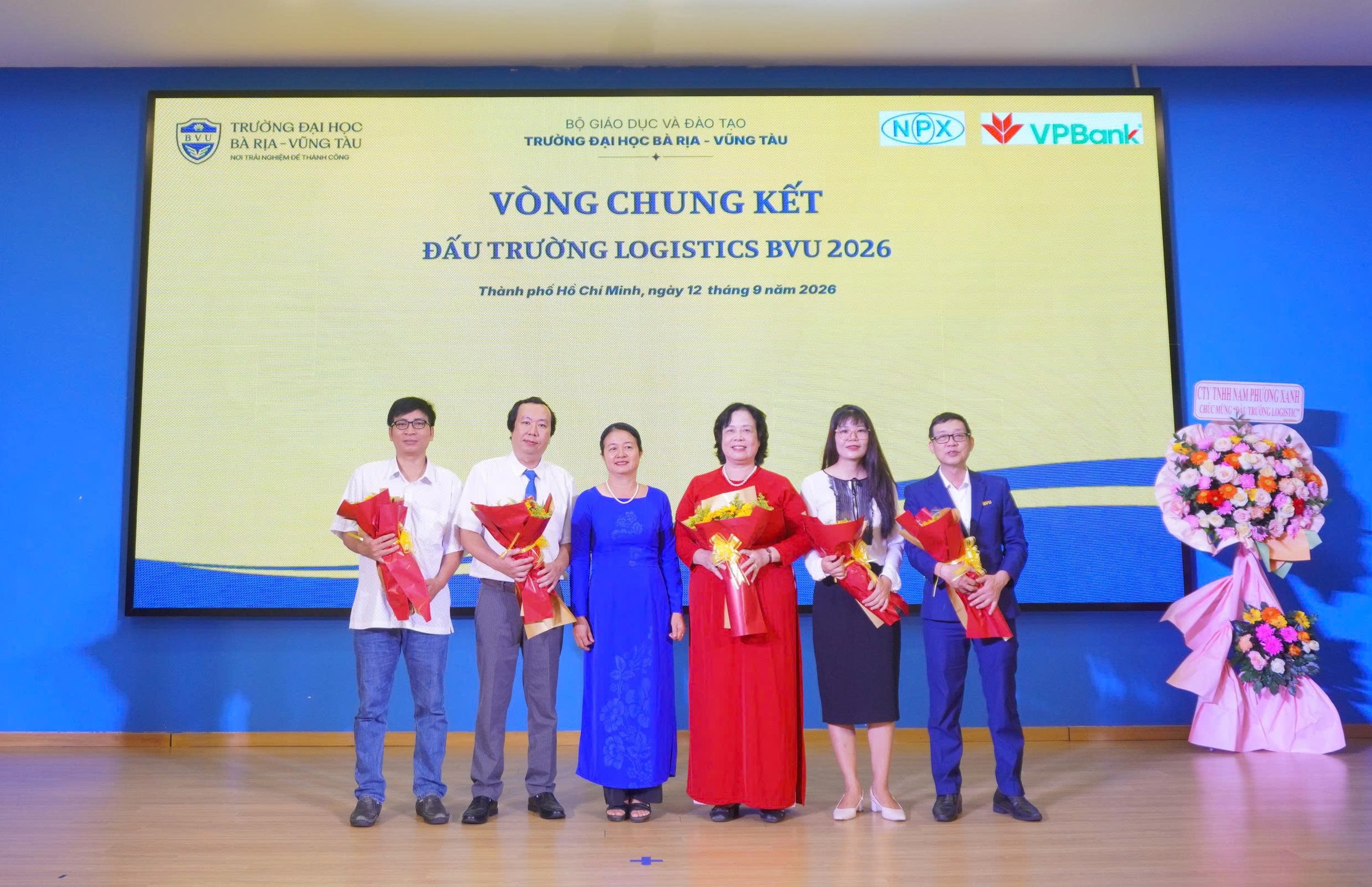
The Finals Judging Panel included:
- Dr. Nguyen Van Anh, Dean of the Faculty of Maritime Economics and Logistics;
- M.S. Nguyen Van Tri, Director of the Center for Technology and Digital Transformation;
- M.S. Do Thanh Phong, Vice Dean of the Faculty of Maritime Economics and Logistics;
- Dr. Dang Thi Ha, Head of Environmental Management, Green Resource Co., Ltd.;
- Mr. Nguyen Hong Ha, Logistics Manager, Halliburton.
This combination of academic expertise, digital transformation and technology, environmental governance, and real-world enterprise experience ensured that project evaluations extended beyond presentation style to encompass operational feasibility, technological readiness, implementation roadmaps, and alignment with industry challenges.
Attending the event on behalf of Ba Ria – Vung Tau University were:
- M.S. Nguyen Quang Thai, Deputy Director of the Student Experience and Corporate Relations Center;
- M.S. Mai Thi Thanh Tam, Deputy Head of the Finance and Accounting Department;
- M.S. Ma Thi Anh Thu, Deputy Head of Research Administration;
- M.S. Tran Thi Duyen, Head of Admissions, Graduate School; along with faculty members and students across various cohorts of the Faculty of Maritime Economics and Logistics.
Representing the enterprise partners were:
- Mrs. Pham Thi Bich Ngoc, Director of Nam Phuong Xanh Co., Ltd., the competition’s Primary Sponsor;
- Mr. Nguyen Le Duy, Branch Manager of Vietnam Prosperity Joint Stock Commercial Bank (VPBank) – Rach Dua Branch, the Semifinals Sponsor.
The presence of corporate leaders further reinforced the link between academic training, technical expertise, and career realities championed by the competition.
Throughout the competition, corporate partners contributed a total of 17 million VND in sponsorships, including Nam Phuong Xanh Co., Ltd., VPBank – Rach Dua Branch, Song Hong Petroleum Company, Chuc Minh Trading & Freight Forwarding Co., Ltd., and Cai Mep Links Co., Ltd. The value of this partnership extended well beyond event financing; more importantly, it served as a bridge bringing industry closer to higher education, giving student initiatives the opportunity to be evaluated against market standards.
Four Projects — Four Perspectives on Green Logistics
While the Warm-up Round set a fast pace under strict time constraints, the Project Defense Round revealed the true analytical depth of the finals. The four teams brought forward distinct topics, yet converged on a shared theme: applying logistics thinking to eliminate waste, optimize flows, and generate social value.
SEA — When a Daily Commute Creates Shared Value
Opening the defense segment, Team SEA presented “Thuan Duong — Streamlining Flows, Optimizing Commute Routes.” The concept originated from an everyday observation: millions of daily commutes to school and work take place while package delivery demands continue to put new vehicles on the road. SEA posed the question of whether underutilized passenger vehicle capacity on existing journeys could be leveraged to establish a more agile delivery network.
“Can a parcel reach its final destination without adding another vehicle to the road?”
According to the team’s presentation, 76% of surveyed users expressed willingness to participate in a pilot program, and the model holds the potential to cut nearly 20,000 metric tons of CO₂ emissions annually. These metrics demonstrated the students’ commitment to data-driven arguments; on a deeper level, the project offered an insightful perspective: logistics optimization does not always require adding vehicles or infrastructure, but rather identifying and utilizing existing idle capacity more effectively.
NextWave Logistics Nexus BVU — Closing the Loop on E-Commerce Packaging
Shifting focus from transit routes, NextWave Logistics Nexus BVU tackled another digital-era challenge with “Eco-Return — E-Commerce Packaging Collection Hubs.” Cardboard boxes, air pillows, and wrapping materials frequently reach the end of their lifecycle within minutes of an order being unboxed; however, these same materials could serve as circular inputs for reuse and recycling when recovered properly.
NextWave proposed an automated collection network to reintroduce post-consumer packaging into circular supply chains. Beyond the eco-friendly concept, the team stood out for situating their solution within operational mechanics and business economics. This grounded approach transformed Eco-Return from an environmental message into an actionable reverse logistics model—one where collection, sorting, dispatching, and value recovery operate as a cohesive system.
HOPE — Using Digital Twins to Identify Bottlenecks Before They Incur Costs
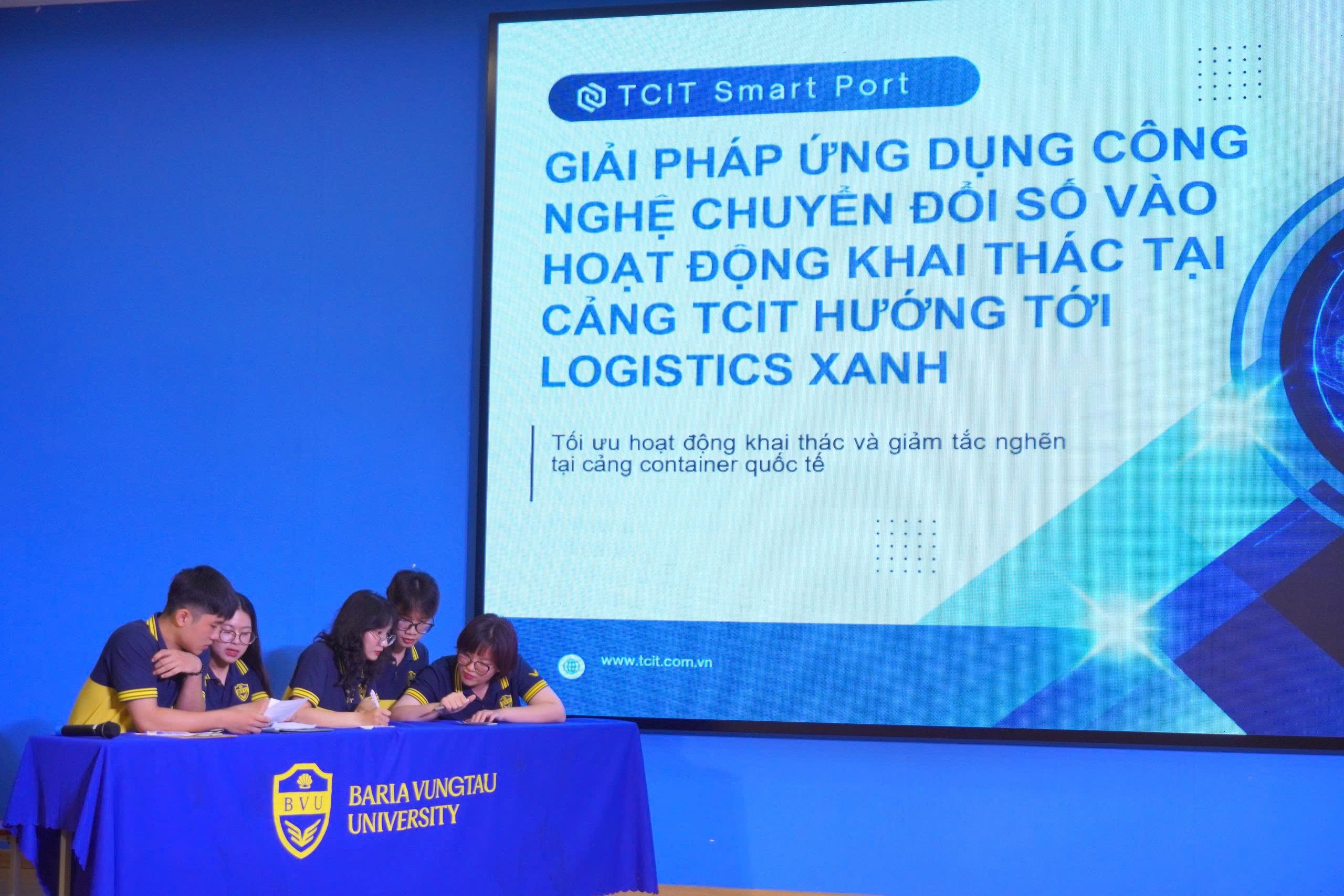
Team HOPE selected an operational setting with higher technical complexity: seaports. Focusing on the implementation of Digital Twin technology at Tan Cang – Cai Mep International Terminal (TCIT), the team aimed to simulate real-time container yard crane and handling equipment traffic flows to detect, analyze, and mitigate terminal bottlenecks.
The application of Digital Twin technology within an undergraduate competition reflected how emerging tech is reshaping logistics thinking. When operational data can be simulated, monitored, and stress-tested in a digital space, managerial decision-making moves beyond reactive troubleshooting; it advances toward predictive modeling, scenario testing, and optimization before costs are incurred. Through their defense, HOPE demonstrated strong technical proficiency and an ambition to drive green port operations through digital solutions.
Logiqueens Team — When “Circle Food” Connects Disconnected Value Chains
Closing the project presentations, Logiqueens Team introduced “Circle Food” — a digital platform designed to aggregate, coordinate, and repurpose surplus food into resources for the agricultural sector. The initiative addressed an ongoing market imbalance: food waste occurs in one node, while agricultural operations in another face resource shortages. Bridging these points involves more than closing a geographic gap; it requires solving challenges in information routing, collection, dispatching, shelf-life timing, and structured supply chains.
“Tons of edible food are discarded every day, while farmers elsewhere struggle to source affordable agricultural inputs. What is preventing these two puzzle pieces from coming together?”
Circle Food was therefore not merely an initiative against food waste. Through a logistics lens, the project addressed the architectural design of information and material flows so that surplus supply reaches demand at the right time through an operationally viable framework. This blend of social impact, circular design, and systematic engineering made Logiqueens stand out during the final round.
When Cross-Examination Becomes a Core Professional Skill
Following each presentation, the judging panel posed rigorous questions requiring teams to clarify operating assumptions, logistics frameworks, feasibility, and scalability. This segment best captured the educational mission of the “BVU Logistics Arena”: a compelling pitch is not enough; it must withstand the pressure of rigorous cross-examination. Students had to listen critically, address counterarguments, defend substantiated points, and acknowledge gaps in their frameworks when identified.
Mrs. Pham Thi Bich Ngoc, Director of Nam Phuong Xanh Co., Ltd., the primary sponsor, commended the energy, creativity, and drive of the BVU students. Speaking from both an industry perspective and as a parent of a student attending the university, she expressed her hope that these student initiatives would progress beyond the competition floor and lecture halls into real-world applications with continued corporate support.
This message also reflected the lasting value of industry-integrated academic events: students gain early exposure to real-world operational standards, while companies discover fresh perspectives, innovative problem-solving approaches, and the emerging talent pool entering their sector.
Announcing the Champions
After two competitive rounds, the auditorium fell silent in anticipation before erupting in applause as the final results were announced. The final standings recognized the dedicated efforts and distinct achievements of all four teams:
| STANDING | TEAM | PROJECT |
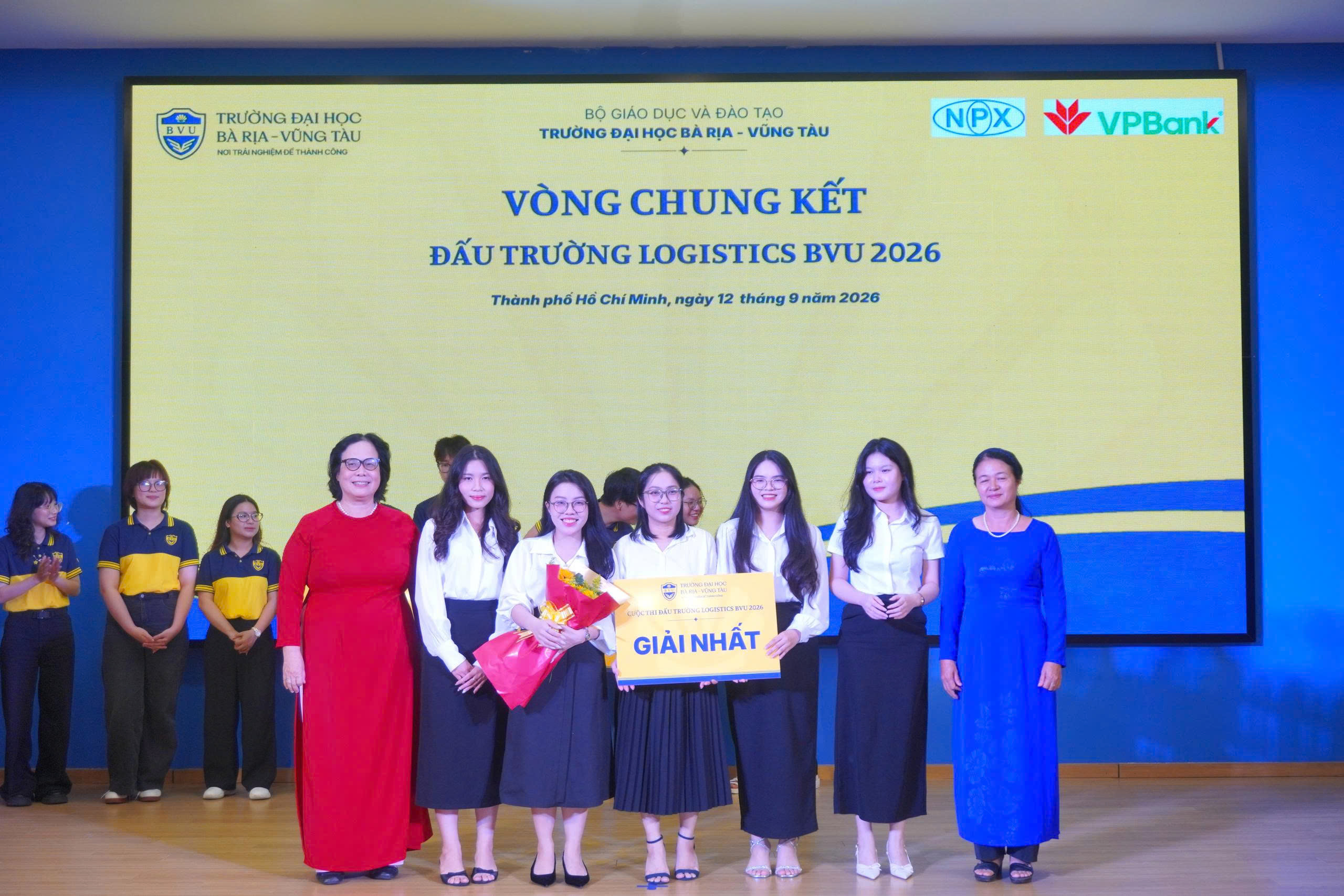
| CHAMPION | Logiqueens Team | Circle Food – A platform connecting, routing, and repurposing food waste into agricultural resources. |
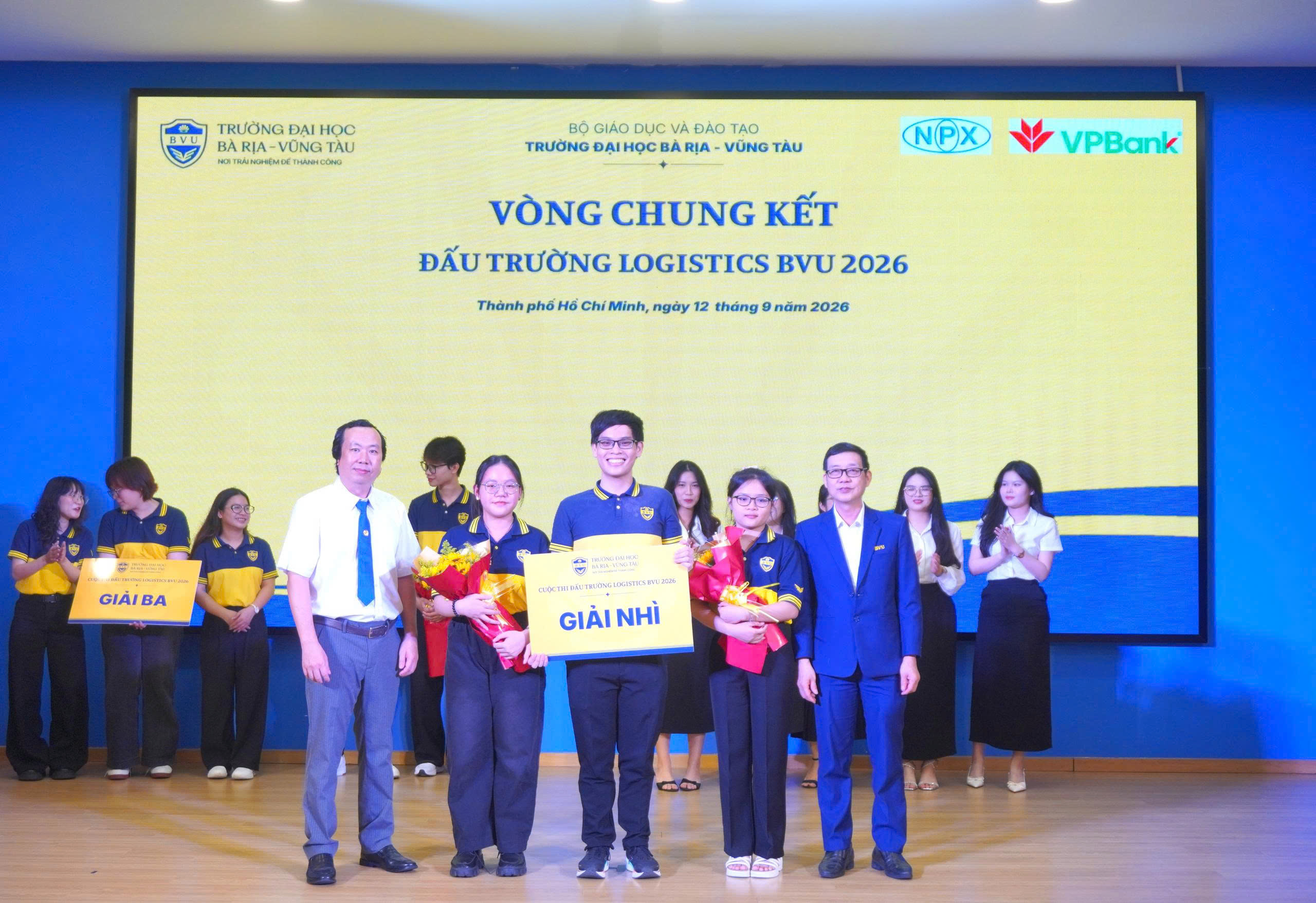
| FIRST RUNNER-UP | NextWave Logistics Nexus BVU | Eco-Return – E-commerce packaging collection stations supporting reverse logistics and the circular economy. |
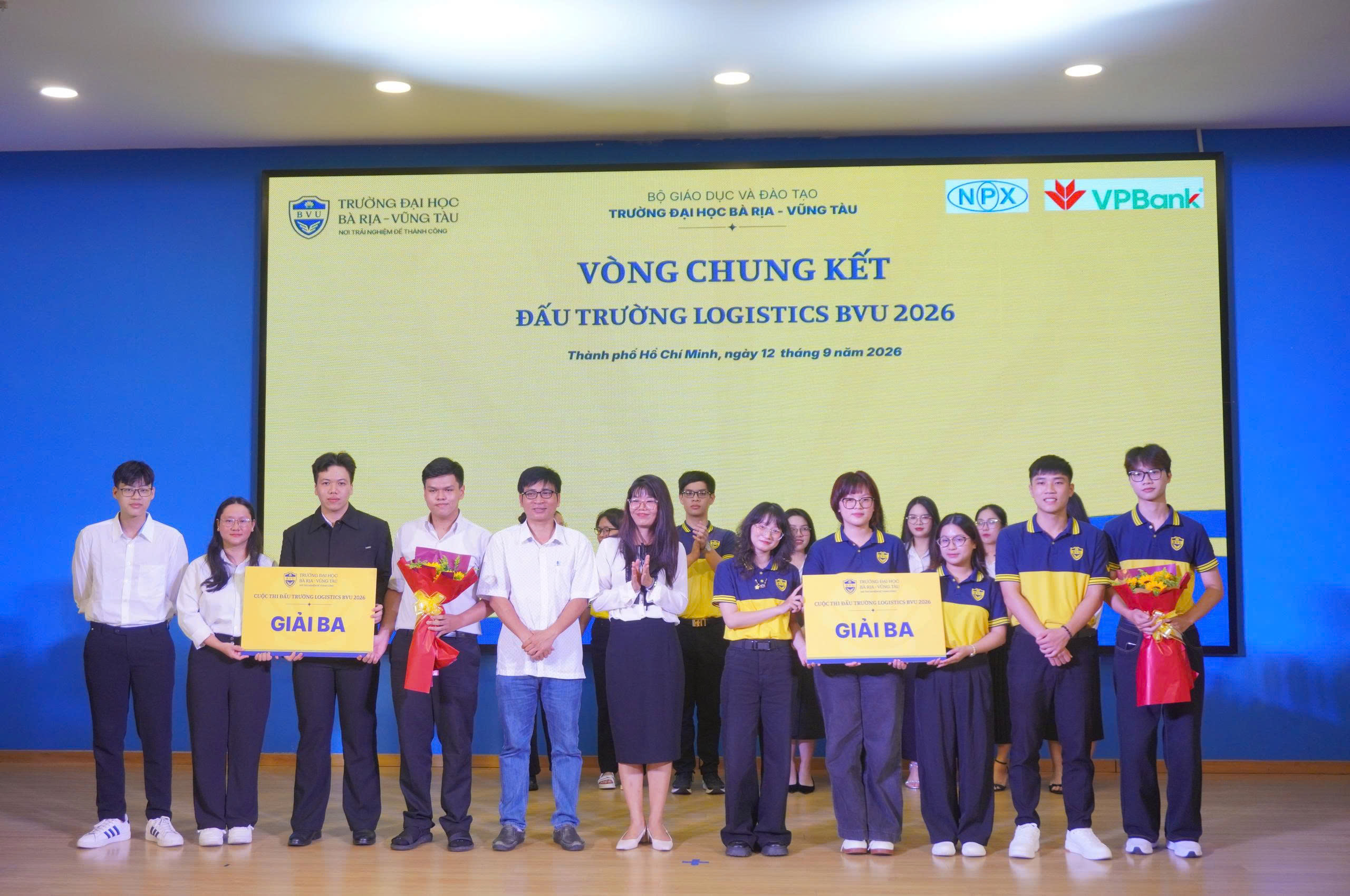
| SECOND RUNNER-UP | Team SEA | Thuan Duong – Streamlining flows and optimizing transit routes. |
| SECOND RUNNER-UP | Team HOPE | Application of Digital Twin Technology in port operations at Tan Cang – Cai Mep International Terminal (TCIT). |
The Championship title went to Logiqueens Team. With this win, the team earned the honor of representing BVU at the national “Vietnam Young Logistics Talents 2026” competition. First Runner-up honors were awarded to NextWave Logistics Nexus BVU, while Team SEA and Team HOPE both secured Second Runner-up placements. The applause, smiles, and presentation of awards marked the culmination of a rigorous multi-stage competition, with the greatest takeaway being the professional skills each team developed across project preparation, testing, presentation, and defense.
From a Competition to Career Readiness
As the Finals of the “BVU Logistics Arena 2026” drew to a close, the final rankings stood as a milestone, but not the only takeaway. Every 60-second answer sharpened domain instincts; every presentation slide required deliberate content curation; every cross-examination question demanded composure and clear reasoning; and every collaborative effort taught students how to perform under pressure. These experiences bridged the gap between academic theory and workplace practice.
Notably, all four projects addressed core issues shaping the future of supply chains: transport capacity optimization, reverse logistics, port digitization, the circular economy, and waste reduction. This showed that students are engaging with logistics as more than just transactional execution; they are evaluating the discipline through a broader lens where operational cost efficiency must align with environmental stewardship, data must back operational decisions, and technology must deliver tangible human value.
Aligned with a commitment to applied learning and corporate engagement, the “BVU Logistics Arena” provided a platform for students to test their abilities before entering the labor market. Within this space, they were empowered to challenge conventions, validate concepts, navigate critical feedback, and grow from areas needing improvement. The competition concluded, but the professional mindset, confidence, and drive to deliver impactful solutions remain.
From an industry perspective, corporate representatives commended the creativity, operational viability, and sustainability focus of the proposed solutions. The enterprise partners reaffirmed their commitment to supporting the university and its students in refining these models—particularly the team representing BVU at the national “Vietnam Young Logistics Talents 2026” competition. This collaboration aims to scale pilot testing, connect specialized industry resources, and bring high-potential ideas closer to practical implementation across commercial and everyday operations. Such continuity ensures the competition serves not merely as an academic exercise, but as the launchpad for solutions that will be piloted, refined, and scaled to generate positive community impact.
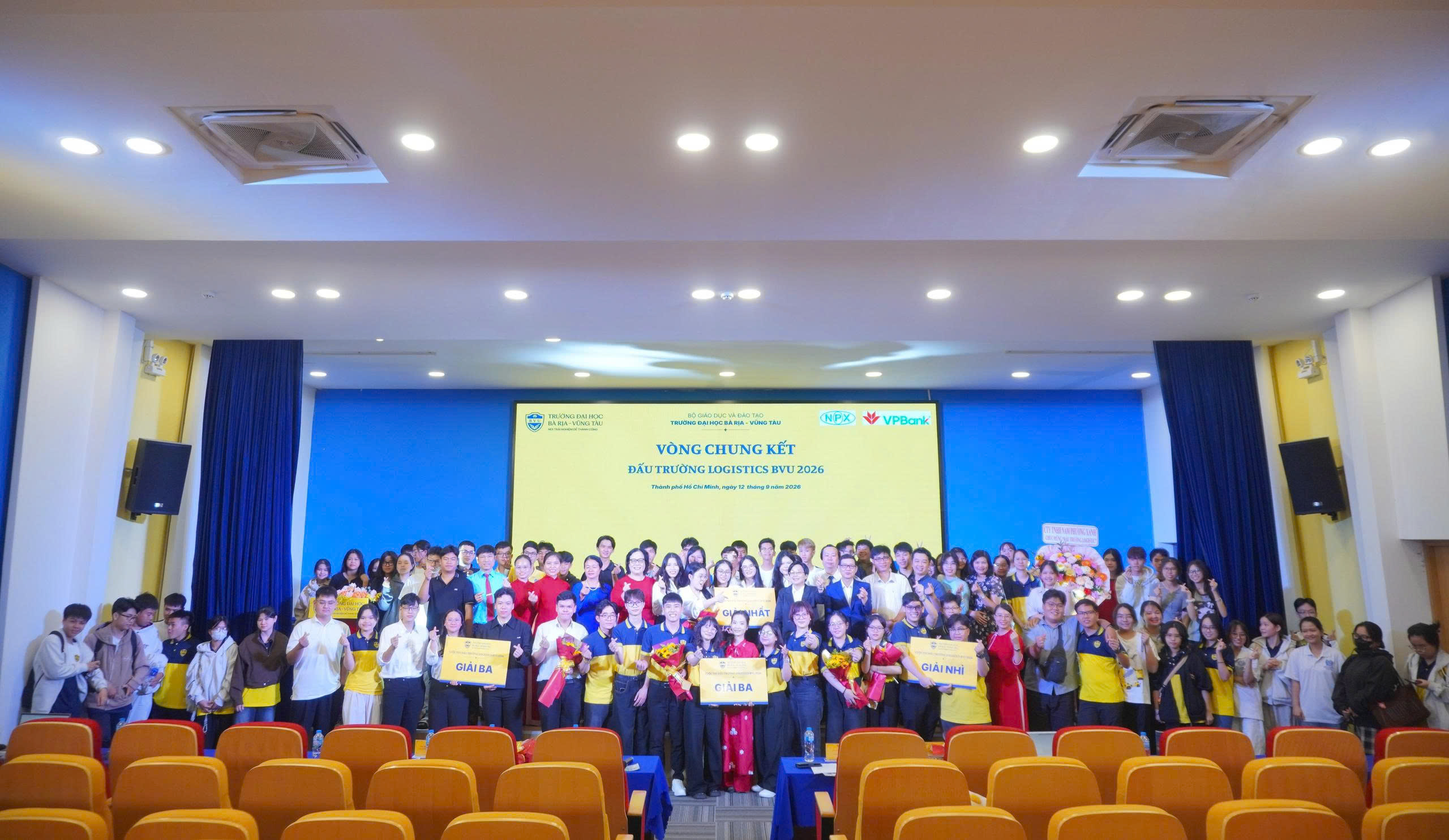
The Faculty of Maritime Economics and Logistics expresses its sincere gratitude for the leadership of the University Board of Management, the collaboration of departments across the university, the continued support of enterprise partners, and the dedication of the judging panel, organizing committee, faculty members, and student support crews. We also commend the professionalism, creativity, and resolve of all four finalist teams, which made this championship round an outstanding success.
M.S. Ngo Thi Tuyet
Faculty of Maritime Economics and Logistics