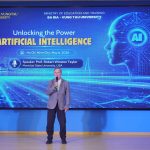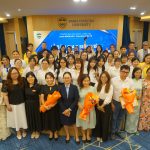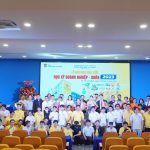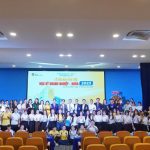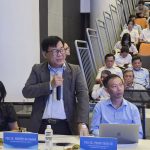

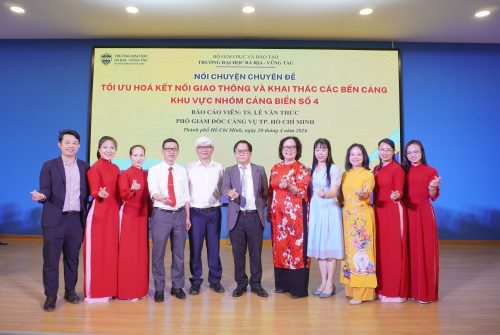
Far more than a conventional academic talk, the session on optimising transport connectivity and port operations in Seaport Cluster No. 4 created a dynamic platform for real-world dialogue, where students engaged directly with the pressing challenges of modern logistics. Through the expert lens of Dr Le Van Thuc – Deputy Director of the Ho Chi Minh City Maritime Administration, complex macro-level issues were translated into clear, relevant, and highly practical insights.
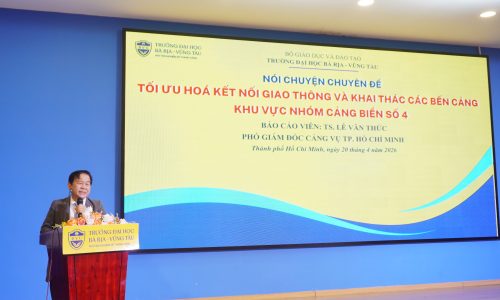
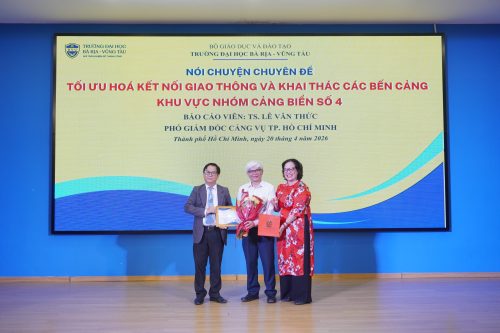
The programme took place on the morning of 20 April 2026 at Hall, Campus 3, organised by the Faculty of Marine Economics and Logistics. Attendees included Mr Nguyen Phuc Hoang – Secretary of the Party Committee of Rach Dua Ward; Associate Professor Dr Nguyen Ba Hoang – President of BVU; Dr Nguyen Van Anh – Acting Deputy Head of the Faculty of Marine Economics and Logistics; alongside leaders of faculties, institutes, departments, university units, business representatives, lecturers, and a large number of students.
From Classroom to Industry Reality
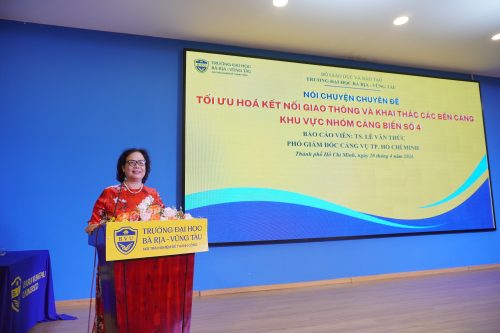
In her opening remarks, Dr Nguyen Van Anh highlighted the strategic position of Seaport Cluster No. 4 within the Government’s socio-economic development framework. As one of the most critical trade gateways in southern Vietnam, the cluster is often described as the “heart” of the logistics supply chain, playing a pivotal role in enhancing national competitiveness. She also emphasised the multi-dimensional significance of the session—not only for local infrastructure planning and management, but also for academic training, research, and particularly for shaping students’ career orientation.
“Dissecting” the Port System: Confronting the Bottlenecks
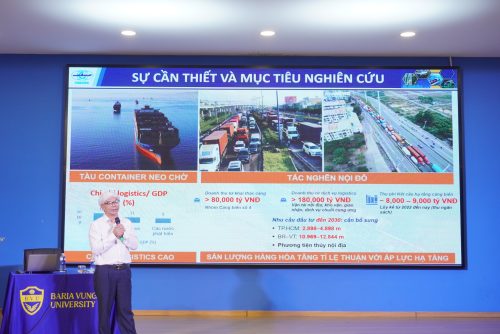
The highlight of the programme was the presentation by Dr Le Van Thuc, a key member of a national project team established by the Ministry of Construction, directly involved in both research and operational management of southern Vietnam’s port system. Drawing on robust data and extensive field experience, he delivered a comprehensive overview of Seaport Cluster No. 4.
By 2025, the cluster is projected to handle nearly 400 million tonnes of cargo and over 14 million TEUs—figures that affirm its role as the driving force of southern logistics. However, this impressive growth is accompanied by mounting congestion pressures, particularly at major hotspots such as Cat Lai and Truong Tho ICD.
A critical issue identified is the severe imbalance among transport modes. With the majority of cargo still reliant on road transport, urban infrastructure is being pushed beyond its limits. Meanwhile, inland waterway transport—more sustainable and efficient—remains underutilised.
In response, the speaker proposed a strategic direction: restructuring the logistics system towards integration, multimodality, and sustainability. Key solutions include expanding inland container depot (ICD) networks and depots near cargo sources, significantly shifting freight to inland waterways, accelerating digital transformation, and developing shared data platforms. If implemented cohesively, these measures would not only ease congestion but also enhance the overall competitiveness of the regional logistics chain.
When Students Engage with “Real Problems”
The atmosphere became particularly vibrant during the Q&A session. Students raised insightful questions on green logistics, transport optimisation, and career opportunities in the digital transformation era—demonstrating both strong engagement and practical thinking.
Notably, students moved beyond passive listening to actively participating in problem-solving discussions with the expert.
Tran Minh Anh, a student from the Faculty of Marine Economics and Logistics, shared:
“I was especially impressed by how clearly the causes of congestion were analysed and the proposed shift towards inland waterway transport. It helped me better understand the industry and feel more confident about my upcoming internship.”
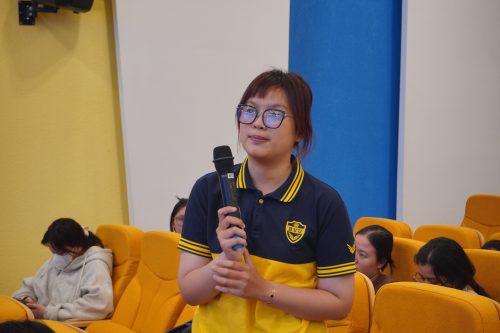
Lecturers also contributed by raising academically grounded and timely questions. In particular, Ms Nguyen Thi Khanh Ly addressed the growing relevance of green logistics, asking how the proposed strategies might impact national logistics performance indicators (LPI) and CO₂ emissions reduction.
In response, Dr Le Van Thuc noted that green logistics is no longer a trend but a “mission-critical” factor across supply chains. While the project has begun integrating green elements—such as modal shifts and green port development—quantifying their impact on LPI remains an area requiring further research. This represents an important direction for ensuring sustainable logistics development aligned with Vietnam’s broader green economy goals.
Spreading Knowledge – Connecting the Future
In his closing remarks, Associate Professor Dr Nguyen Ba Hoang commended the academic and practical value of the session, affirming that it reflects BVU’s commitment to “practice-oriented education.”
The insights provided by Dr Le Van Thuc offered the University a clearer understanding of existing bottlenecks within Seaport Cluster No. 4 and the urgent need for optimised multimodal connectivity towards a modern, green, and sustainable logistics system. These insights serve as valuable real-world data to enhance both teaching quality and research capacity.
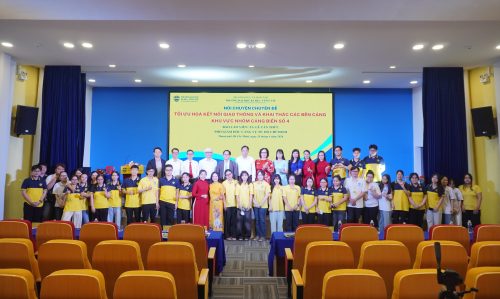
Concluding the programme, the President expressed his sincere appreciation to Dr Le Van Thuc for his outstanding presentation. He also tasked lecturers and students—particularly those from the Faculty of Economics and Logistics—with integrating these insights into teaching and learning, while proactively exploring innovative solutions to industry challenges.
He further affirmed BVU’s readiness to contribute practical solutions in urban logistics and transport infrastructure, supporting the sustainable socio-economic development of Rach Dua Ward and Ho Chi Minh City at large.
The session may have concluded, but its impact endures—serving as a catalyst for both lecturers and students to evolve, adapt, and take the lead in shaping the future of logistics in a rapidly changing landscape.